-
 Taylor Kellerman of Kualoa Ranch shares a new campaign to fight the invasive ant species in Hawaiʻi.
 -
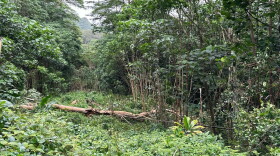 Researchers are studying a fungal pathogen that stunts albizia trees to determine whether it could help manage the invasive species in Hawaiʻi.
 -
 Molokaʻi residents fight to renew import restrictions aimed at keeping coconut rhinoceros beetle off island.
 -
 Roger Babcock, director of the Honolulu Department of Environmental Services, explains a new composting program the city will be rolling out; HPR speaks with the filmmakers behind “Pili Hou,” an upcoming documentary about the search for a long-lost matriarch.
 -
 State specialists say that the coqui frog infestation in Pālolo Valley is worsening despite containment efforts.
 -
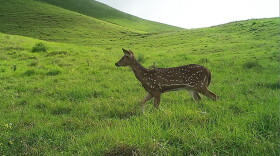 Melissa Price, an associate professor with the UH College of Tropical Agriculture and Human Resilience, studies the impact of invasive deer species in Hawaiʻi.
 -
 One-year import restrictions to slow the spread of invasive coconut rhinoceros beetles have passed for Maui and Lānaʻi, but frustrations remain as similar rules for Molokaʻi expire.
 -
 The state Board of Agriculture and Biosecurity rejected a proposal to relax import restrictions to Maui and Lānaʻi meant to keep out the invasive coconut rhinoceros beetle, but is open to making changes to those restrictions.
 -
 The state has approved an interim rule that restricts imports to Maui and Lānaʻi, as part of an effort to keep the invasive coconut rhinoceros beetle from establishing on those islands.
 -
The Hawaiʻi County Council is urging state officials to step up enforcement of coconut rhinoceros beetle containment protocols in Kona.

© 2026 Hawaiʻi Public Radio
Play Live Radio
Next Up:
0:00
0:00
Available On Air Stations


