

Savannah Harriman-Pote
Senior Reporter, Climate & Energy, and Editor-at-LargeSavannah Harriman-Pote is HPR's Senior Reporter, Climate and Energy and Editor-at-Large. She is also the lead producer of HPR's first narrative podcast: This Is Our Hawaiʻi. Prior to that, she worked as a producer for The Conversation. She also produces Manu Minute in collaboration with the University of Hawaiʻi at Hilo. She was born and raised on Hawaiʻi Island, and she collects lava lamps.
Contact her at sharrimanpote@hawaiipublicradio.org.
-
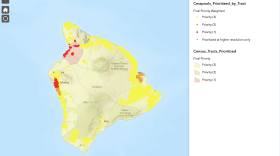 As Hawaiʻi County nears the state deadline to eliminate cesspools, the price tag for conversions keeps climbing.
 -
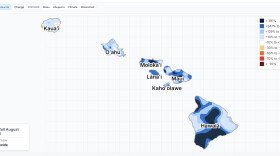 Last month ranks as the second wettest August in more than a century, according to the Hawaiʻi Climate Data Portal’s monthly report.
 -
 For almost half a century, NOAA tracked the number of billion-dollar climate and weather disasters that occurred each year across the United States. That work was nearly halted by the Trump administration last year. HPR's Savannah Harriman-Pote reports on the effort to keep the work going and what the database shows about changing disasters.
 -
 In 2025, city agencies used about 30 million more kilowatt-hours of electricity — enough to power about 500 homes for an entire year. Agency water use was also up by about half a million gallons per day.
 -
 Hurricane Lala brought down hundreds of trees across the islands, but most of Oʻahu’s legacy trees survived the stormy weather.
 -
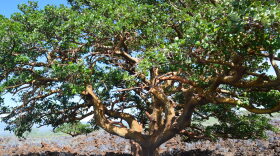 One of the largest wiliwili trees in the state had the majority of its branches ripped off during Hurricane Lala. A critically endangered uhiuhi tree was also damaged.
 -
 More than one million trees on Hawaiʻi Island have already been lost to the fungal disease Rapid ʻŌhiʻa Death, and Hurricane Lala may worsen that epidemic.
 -
 The lights are slowly coming back on around Hawaiʻi Island, but Hawaiian Electric says some pockets of customers could be without power for weeks. HPR’s Savannah Harriman-Pote spoke to residents about how they’ve managed so far without power.
 -
 Hawaiʻi County’s Department of Water Supply is asking residents to limit their water use in the wake of Hurricane Lala. HPR’s Savannah Harriman-Pote explains why.
 -
 Local wildlife experts are asking people to keep an eye out for injured seabirds after this weekend’s storm.


