-
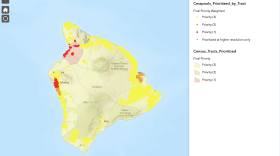 As Hawaiʻi County nears the state deadline to eliminate cesspools, the price tag for conversions keeps climbing.
 -
 House Bill 1618 establishes a new loan program to help homeowners afford cesspool conversions.
 -
 A University of Hawaiʻi pilot program to test new wastewater technologies may lose out on more than half a million dollars in state funding due to a miscommunication about when the money needed to be spent.
 -
 Hawaiʻi has a deadline of 2050 to eliminate about 80,000 cesspools across the state. That target may seem far off, but at the stateʻs current pace, it would take more than 200 years to convert all its cesspools into compliant septic systems.
 -
Amy Miller and Liz Borowiec of the EPA Region 9 Office spoke with HPR’s Maddie Bender about the agency’s role in converting large-capacity cesspools in Hawaiʻi.
-
 The Honolulu City Council approved the fund that can be used for climate infrastructure projects and grants for cesspool conversions. The measure would deposit 1.5% of property tax revenue into a fund dedicated to climate resiliency. That’s about $8.6 million a year.
 -
 A Consul General of France meets with military and state officials in Hawaiʻi; Peace Corps braces for the possibility of cuts after DOGE visit
 -
 The Big Island takes in roughly $937 million in revenue, the majority of which comes from property taxes. On top of routine expenses, the county is facing significant costs for repairs to its aging wastewater infrastructure.
 -
 The recent partial collapse of an Oʻahu home into the ocean at Kammies Beach has raised a number of environmental concerns, including what's to be done with the property's cesspools.
 -
Kauaʻi homeowners with cesspools can receive up to $20,000 in federal money to convert them. HPR talked to Stuart Coleman, the founder of Wastewater Alternatives and Innovations, to learn more about the importance of converting cesspools.

© 2026 Hawaiʻi Public Radio
Play Live Radio
Next Up:
0:00
0:00
Available On Air Stations


