-
 Hawaiʻi's waters contain more than 600 native limu species. Karla McDermid guesses she can identify 40 of them by touch alone. Marine biologist Karla McDermid has created a "Limu Ark," a living library on Hawaiʻi Island of about 70 native seaweed species.
 -
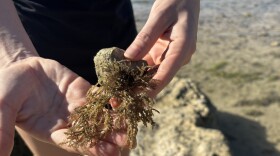 Researchers just reported that the most abundant species of invasive algae in the main Hawaiian Islands has been found in Papahānaumokuākea at Kuaihelani, or Midway Atoll.
 -
 John Starmer, science director at the Maui Nui Marine Resource Council, spoke with HPR’s Maddie Bender about using limu to monitor coastal water quality.
 -
 The state Board of Land and Natural Resources voted to move forward with an initiative to raise and preserve native and endemic limu species in Hawaiʻi.
 -
 Dr. Lum honors Isabella Kauakea Yau Yung Aiona Abbott, the "First Lady of Limu." The first Native Hawaiian woman to earn a PhD in science, she was also the first female and person of color to become a full professor of science at Stanford University.
 -
 The ability of invasive seaweed to adapt to ocean changes could be one reason why they outcompete native species, according to a new study by University of Hawaiʻi at Mānoa researchers.
 -
 The University of Hawaiʻi Center for Oral History just launched a collection of interviews tapping seaweed cultural expertise across the state. The oral histories with limu experts like Wally Ito build on the work of seaweed scientist Isabella Abbott.
 -
 A Hawaiʻi Island farm recently debuted its first limu kohu-fed and low-emissions goat cheese at the Merriman’s restaurant in Waimea. Limu kohu has long been a staple in the traditional Native Hawaiian diet, but studies have shown that goats may also benefit. HPR's Kuʻuwehi Hiraishi was on site to learn more about this process.
 -
Limu is not just seaweed, it's the foundation of the marine life food chain. Our partners at the Center for Oral History at the University of Hawaiʻi at Mānoa introduce limu gatherers Wally Ito, Vivian Lehua Ainoa and Alyson Napua Barrows.
-
 AES Hawaiʻi discusses the opening of its Waikōloa solar farm; a Leilani Estates resident reflects on the fifth anniversary of the Kīlauea eruption; the Limu Hui shares the importance of seaweed to the marine life food chain; and a Kahuku High School senior talks about being a U.S. Presidential Scholar

© 2026 Hawaiʻi Public Radio
Play Live Radio
Next Up:
0:00
0:00
Available On Air Stations


