

Emma Caires
News ProducerEmma Caires is a News Producer at Hawaiʻi Public Radio. She was the Legislative News Intern during her final semester at the University of Hawaiʻi at Mānoa, where she got her bachelor's degree in journalism and communicology.
With strong familial ties to Kāneʻohe, she loves being able to report on things that hit close to home, both politically and personally. In her free time, she can be found out in nature, trying out the newest coffee shops, or in the Foodland poke line.
-
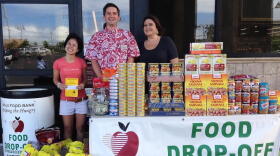 The 2025-2030 Food & Nutrition Security Plan establishes direct, tangible guidelines to ensure that all residents across Maui, Molokaʻi and Lānaʻi have access to affordable, nutritious and culturally appropriate food.
 -
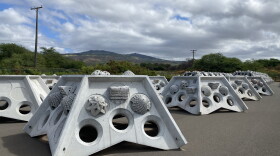 The Kalaeloa Hybrid Reef Project submerges 60 multi-ton structures in the ocean on Oʻahu to reduce wave energy, slow coastal erosion and support a healthier coral reef ecosystem.
 -
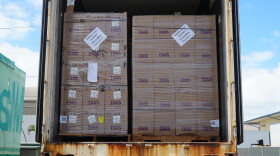 About 1.08 million eggs from Hickman’s Family Farms in Arizona will be distributed to communities across Hawaiʻi over the next two months as a result of a civil lawsuit against artificial price inflation by the farms earlier this year.
 -
 The FEMA for Safe Recovery Act, introduced on Capitol Hill earlier this month, would create a federal policy requiring gender-responsive and trauma-informed training for FEMA. This includes better federal-to-local coordination, check-ins with all members of a household rather than just the head of household, and strengthened shelter safety.
 -
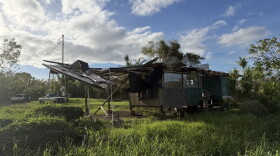 Sierra-Lynn Stone, a sixth-generation kalo farmer on Kauaʻi, says disaster preparation takes on a new layer for her and many farmers across Hawaiʻi as they must care for their land and animals on top of taking care of themselves and their families.
 -
 $45 million will go to the UH John A. Burns School of Medicine, and $13 million will go to the state Department of Health. The funds come from the U.S. Department of Health and Human Services.
 -
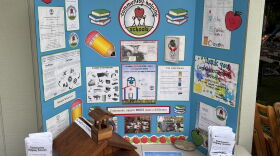 Community Helping Schools is an Oʻahu nonprofit dedicated to supplying public school teachers with resources, free of charge. This is the organization's 26th year operating across the island.
 -
 Humanity Hale, a Hawaiʻi Island nonprofit dedicated to healing trauma and helping at-risk youth, is looking to buy land to expand its program.
 -
 Two major storms have hit Hawaiʻi since the spring, and others have come close. Structural damage has been extensive in places, but the entire state has shared another experience: disaster fatigue.
 -
 The funding will establish an adolescent inpatient behavioral health unit at the Kona Community Hospital, making it the only one of its kind outside of Oʻahu.


