
HPR's coverage of the Hawaiʻi legislative session

Hawaiʻi Public Radio is tracking the latest news inside the Hawaiʻi State Capitol as lawmakers work throughout the 2026 legislative session from Jan. 21 to May 8.
Hawaiʻi's Legislature operates on a biennial (two-year) system. 2025 was the first year of the upcoming biennium. Bills that did not pass in 2025 can be revived this year at the same legislative stage.
Keep checking this page to find interviews from HPR's The Conversation with state lawmakers, appointed officials, and leaders such as Gov. Josh Green, Senate President Ron Kouchi and House Speaker Nadine Nakamura.
Want more legislative coverage straight to your email? Subscribe to our weekday news newsletter, Akamai Recap, using the form at the bottom of the page or by clicking here.
Have a legislative tip or story idea for Hawaiʻi Public Radio? Contact us at news@hawaiipublicradio.org.
-
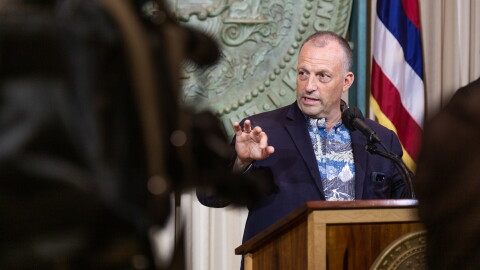 Mark Ladao/HPRGov. Josh Green said the state has identified about $686 million in damages from storms and an earthquake so far this year, and estimates at $319 million in resilience projects.
 -
 Office Of Gov. Josh GreenGov. Green speaks after assessing storm damage on Kauaʻi after Hurricane Lowell.


-
 Recent departures at the state Legislature will lead to new lawmakers this year. It's one of the best opportunities for newcomers to win elections in Hawaiʻi.
 -
 Retired federal public defender Ali Silvert explains why lawmakers are pushing to convene a special session in light of the bribery case involving Lt. Gov. Sylvia Luke.
 -
 Hawaiʻi's Good Government Caucus, made up members from both chambers and both parties, is calling for an emergency special session to address corrupt campaign finance amid the ongoing bribery scandals.
 -
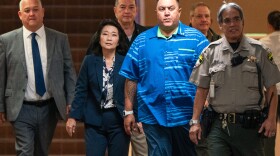
 Four defendants in Hawaiʻi's high-profile government bribery case have pleaded not guilty to their charges.
 -
 On the Long View, HPR contributor Neal Milner gives analyzes the grand jury indictments against former Lt. Gov. Sylvia Luke.
 -
 HPR interviews Hawai’i residents to hear their reactions to the new age restriction on truck bed-riding.
 -
 A grand jury indicted Lt. Gov. Sylvia Luke and four others on felony bribery charges stemming from an alleged 2022 incident.
 -
 John Choi said he decided to run after seeing many powerful Democrats rally behind Kauaʻi Mayor Derek Kawakami.


