
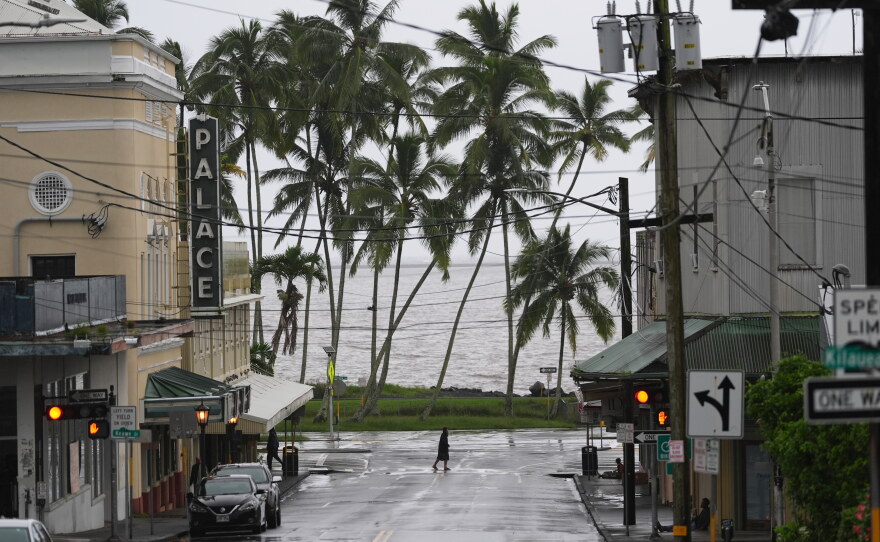
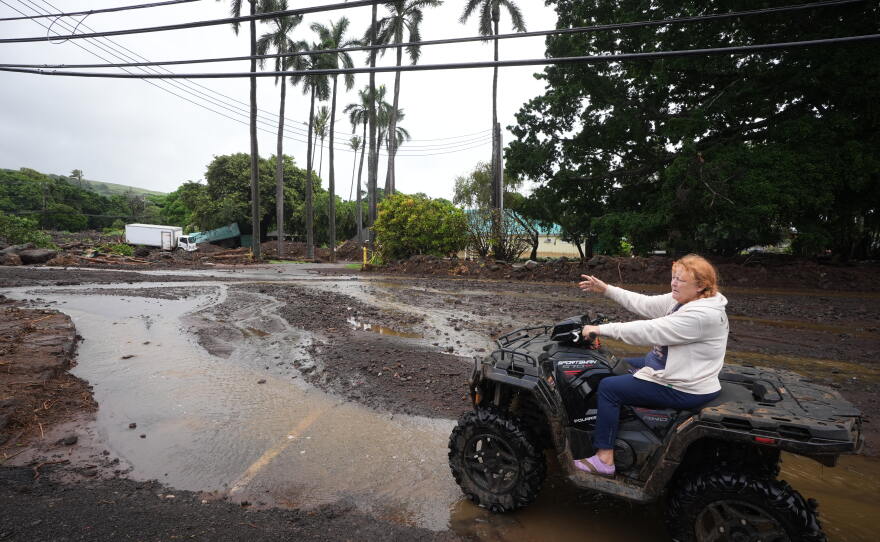
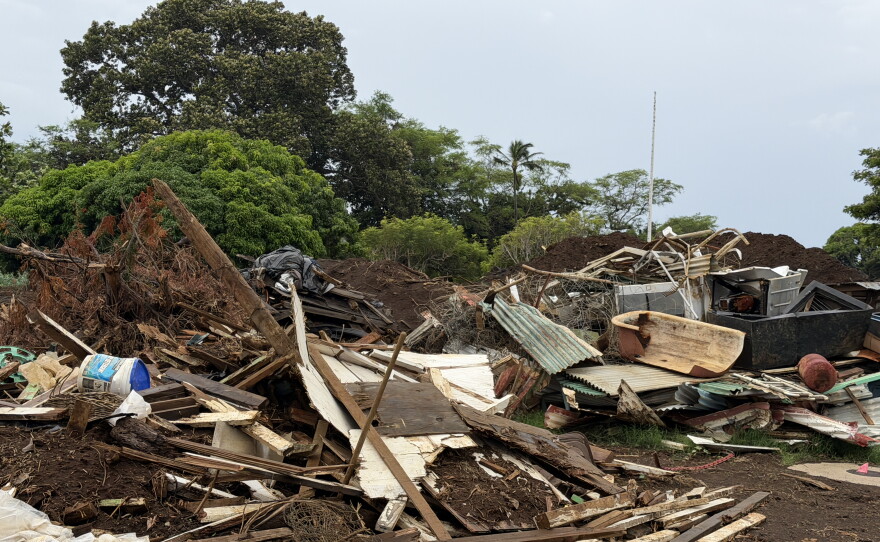
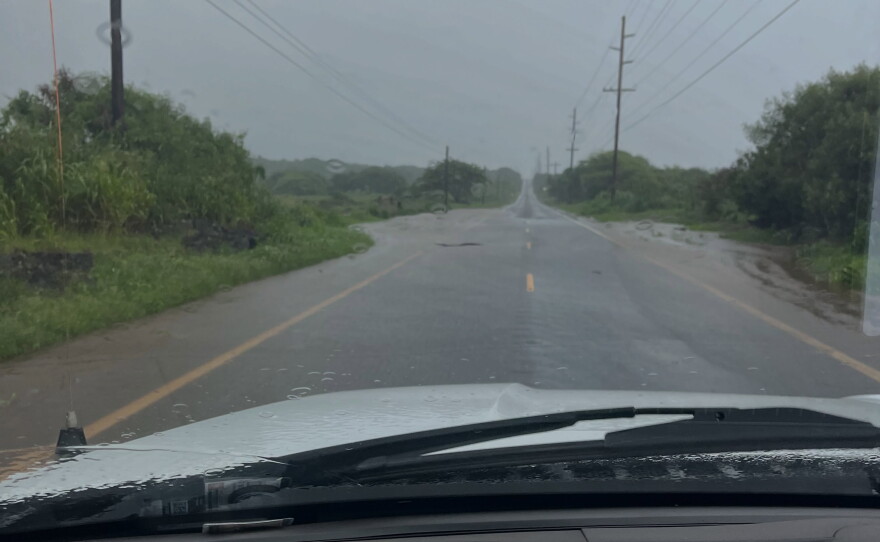
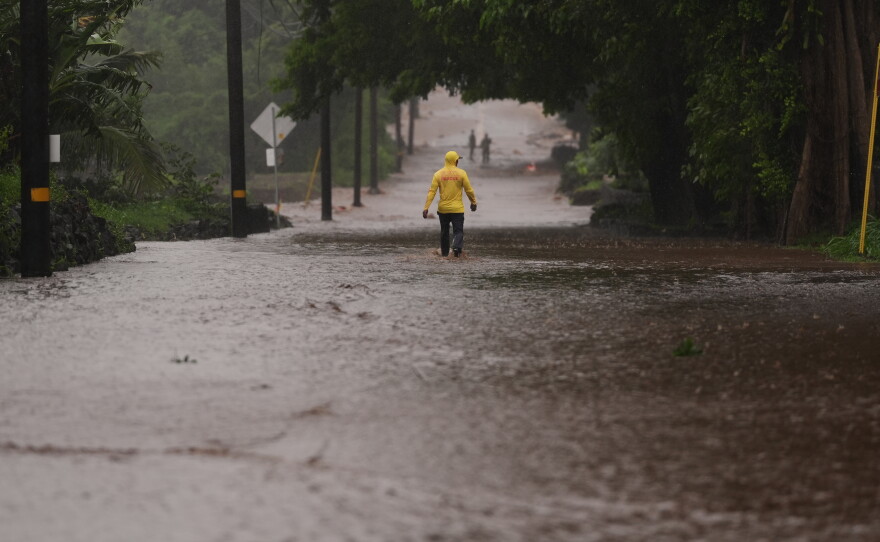
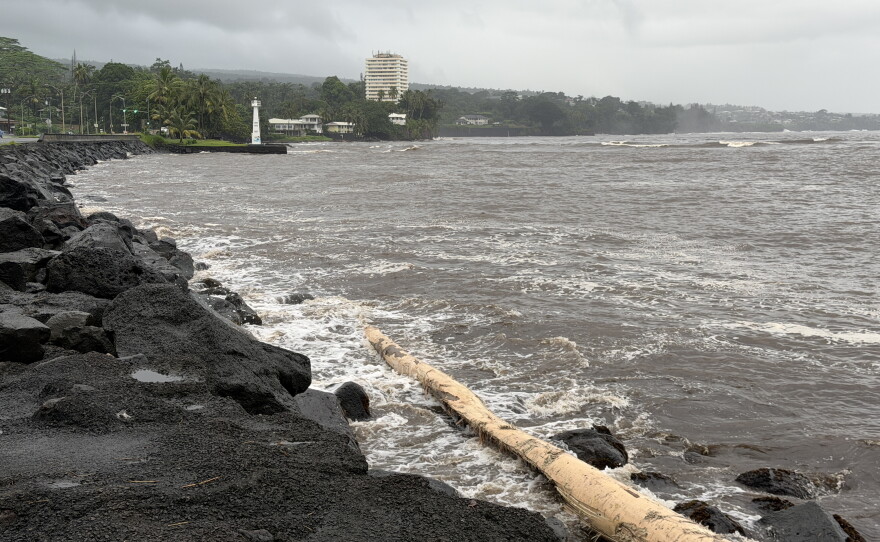
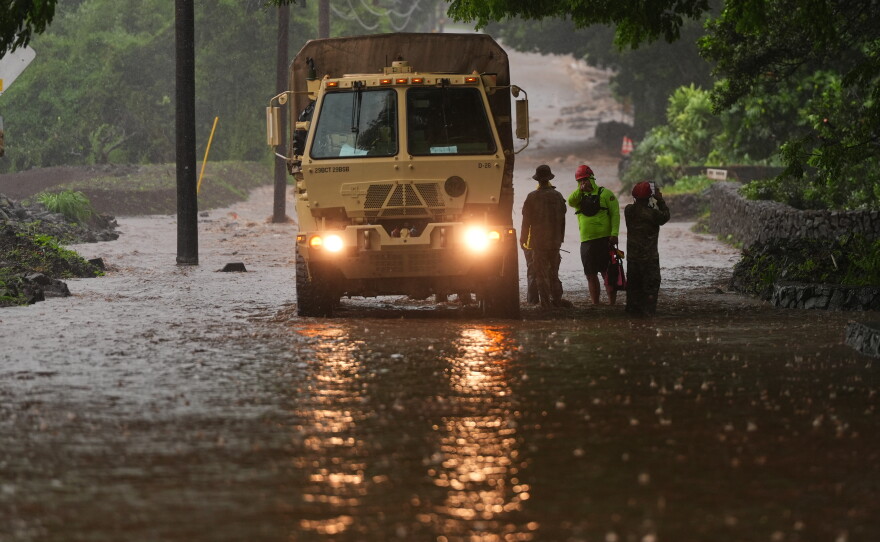
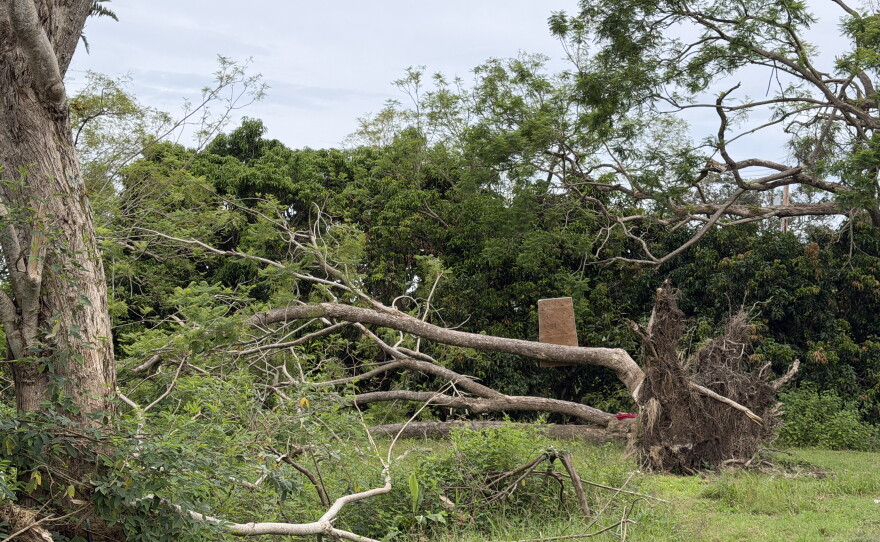
Across Hawaiʻi Island, huge downed trees with tangles of exposed roots lined the roadways. Power lines dipped to the ground in places, and orange cones marked piles of rubble.
These impacts did not come from Hurricane Nolo. Rather, they were reminders of the island's other recent disasters — Hurricane Lala, an earthquake, and back-to-back Kona Lows — as residents steeled themselves this weekend for yet another storm.

On Friday morning, Britta Jacobson loaded up her Chevy with supplies and drove from her home in Nāʻālehu to Manukā State Wayside Park near Ocean View.
“I've got my little container of food, and I've got water and everything in the truck,” she told HPR, sitting at one of the park’s picnic tables.
During Lala, the road out of Jacobson’s subdivision, Green Sands, was completely washed out. Jacobson was worried that if Nolo hit with similar force, she could get trapped at home.
“Those floodwaters just literally took the pavement off the road,” she said.
Hawaiʻi County had opened a shelter at the Nāʻālehu Elementary School Gym, but Jacobson said she had decided not to go there out of concern that the community would get cut off as it did during Lala.
“Nāʻālehu tends to flood on both sides of the town, and I have my younger son in Ocean View, who suffers from anxiety and stress. … And so I thought I'd go (to) at least be available to help him,” she said.
Jacobson contemplated her next move under one of the open-air pavilions in the park, where she burned a coil of citronella to keep the bugs away. She ended up spending Friday night in a shelter in Ocean View.

When Nolo stalled off the coast of Hawaiʻi Island on Saturday, Jacobson took a chance and headed home — only for flooding to close roads around Nāʻālehu that evening. Public works crews were able to reopen the road on Sunday.
Elsewhere on the island, emergency officials closed the mountain pass between Waimea and Hāwī due to 74 mile-per-hour gusts. In rainy Honokaʻa, the Hongwanji Mission posted a notice outside its temple to let people know its weekly community meal was canceled. It offered a simple explanation: HURRICANE, spelled out in big black letters.
On the Kona side, it was hard to imagine a powerful storm was lingering fewer than 200 miles off the coast. The sky was blue on Saturday above Hōlualoa, a historic art village on the slopes of Hualālai. People milled about the town’s galleries and boutiques, which were mostly open for business.
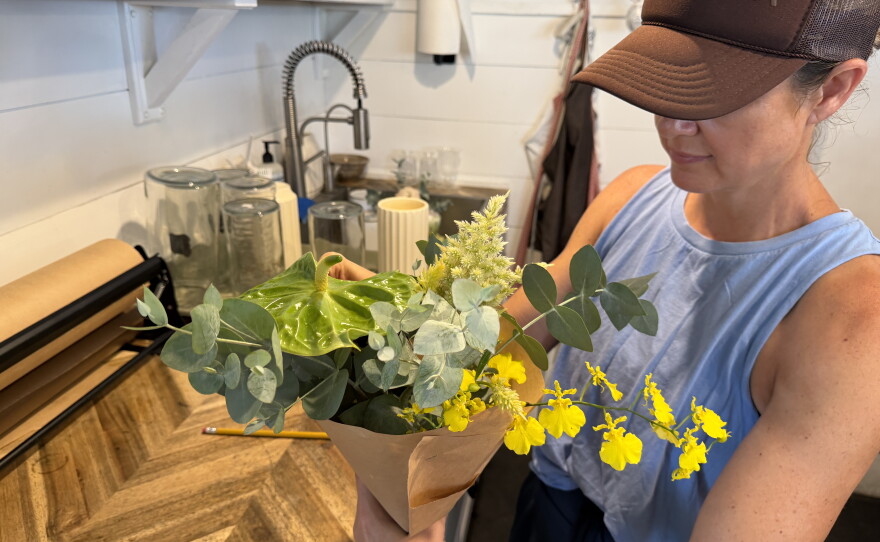
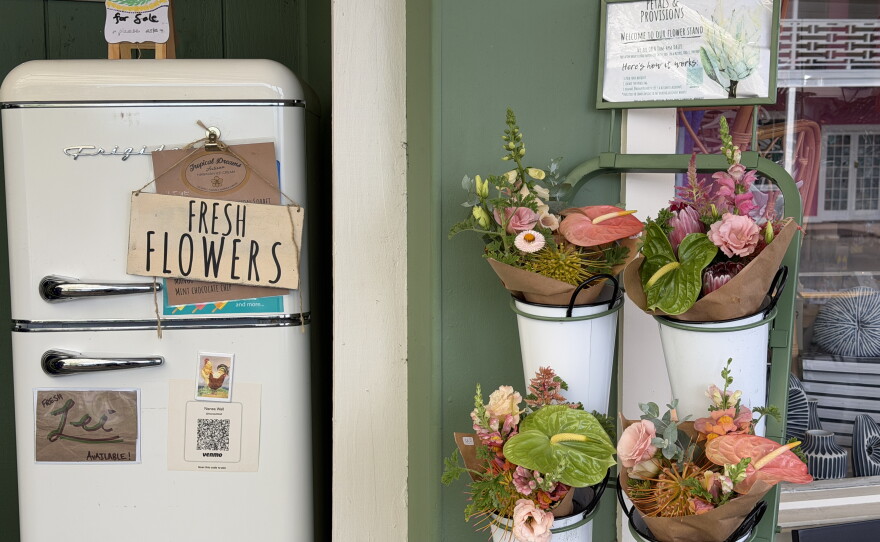
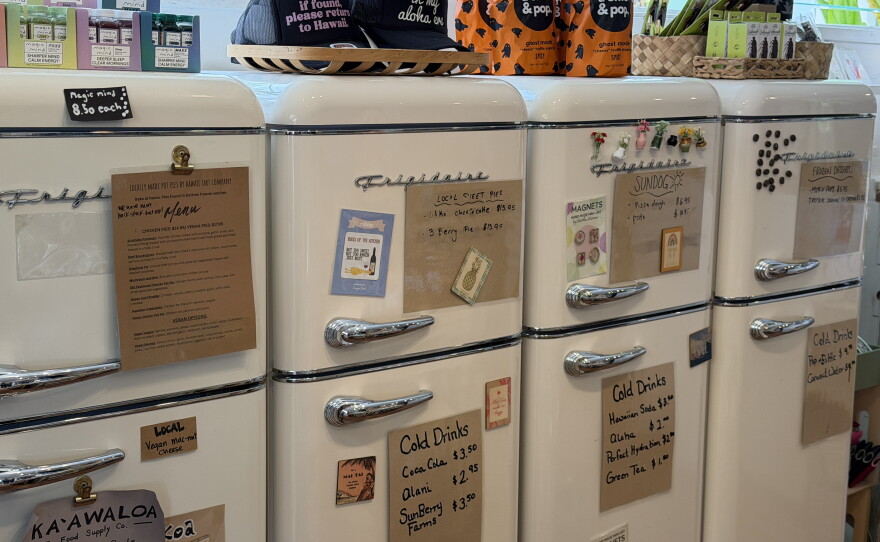
Behind the counter at Petals & Provisions, store owner Mandi Cooperson wrapped up a flower arrangement for a customer. The store sells locally made goods and fresh flowers, including proteas from Ocean View, anthuriums and orchids from Hilo, and snapdragons and foxgloves from Waimea and Paʻauilo.
“For the most part, we source everything on-island and all over the island,” Cooperson told HPR.

Ahead of Hurricane Lala, Cooperson preemptively closed her storefront, as well as Kona Treehouse, her second boutique in town, to ensure her employees’ safety. Her buildings then lost power during the storm and had to stay closed for three days. Between the loss of goods — including highly perishable fresh flowers — and income from customers, Cooperson estimated Lala cost her businesses at least $10,000.
This time, Cooperson had decided to stay open as weather allowed. Customers filtered through the shop as the sun shone overhead, but Cooperson wasn’t at ease.
“It feels like a constant tug of whether I'm making the right decision or not,” she said.
The impact of Hawaiʻi Island's disaster-packed year isn’t just evident in the landscape — it’s evident in the faces of the people who live here, and it echoes in their voices when they wearily wonder aloud what’s next. While Nolo largely spared the island this weekend, no one is quite ready to let their guard down.


